
Exploring the Business of Energy with Brian Horn
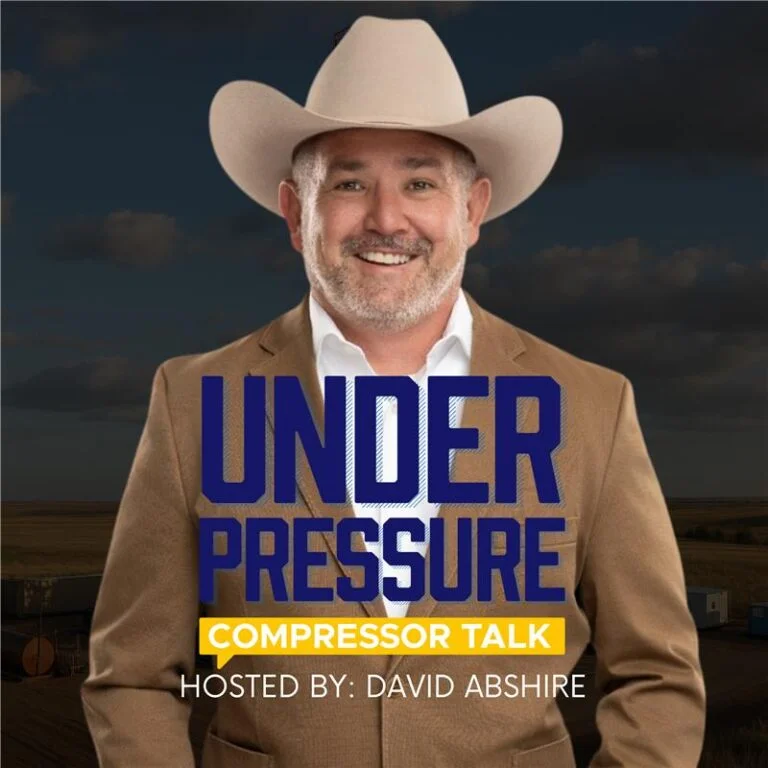
Topics: Energy Markets & Oil's FutureCareers in Oil and Gas
The kids-at-the-house test for picking partners
Brian Horn’s filter for deciding whether to do a deal with someone is not a balance sheet test. “If I would be okay leaving my children at this person’s house to spend the night, then I’d probably do a business deal with them,” he told David Abshire on Under Pressure. The reasoning is simple: 90% of the deal is the people in the deal, not the mechanics of it. The mechanics take care of themselves.
Horn says the biggest thing he underestimated over his career was the value of relationships and the network. The other thing he has worked on is not letting his own intuition color his read on what other people can do. He describes how easy it is to underestimate someone’s capabilities because of personal bias, and says he has spent his whole career trying not to.
The career itself started sideways — a geology class and a teammate on his college soccer team, as Abshire framed it in the introduction — but what kept Horn in it was the business side: the hunt for new reserves. He carries one line from Marlon Downey, a past president of the American Association of Petroleum Geologists: “Geology is a science, but exploration is a business.”
Hatteras Energy and the portfolio bet
Horn’s answer to the current market is Hatteras Energy, an exploration portfolio company. The reasoning starts with how hard it has become to grow a company in the lower 48, where the game runs through the M&A market, tier one versus tier two and three acreage, and how good a reservoir engineer’s decline curve analysis is. Large independents and super majors have the balance sheets to absorb other companies in billion-dollar transactions, and that has consolidated the industry.
Horn spent last year as president of AAPG and used that time at universities talking to professors and students, and to executives at integrated oil and gas companies. The concern he heard: people with 10 to 15 years of experience who have drilled hundreds of wells, but hundreds of the same well. Conventional exploration has largely faded since 2012. The big discoveries are still out there — Namibia, Guyana, the Norwegian North Sea, Brazil — but those are $150 million to $200 million wells. What got forgotten, Horn argues, are the conventional plays in North America where smaller independents still hold prospects.
The structural problem with those prospects is that a single one typically has 20 or 40 working-interest owners, each holding 2 or 3 percent, each diversifying risk in their own small way. Selling a single deal is hard. Hatteras instead vets opportunities technically for investors, high-grades them, and selects through choice. The target is five or six exploration wells a year at a 25% success rate — where one well has to pay for the other three. That requires understanding the financial risk and the uncertainty around the subsurface. Horn says the company has two high-graded opportunities it is pursuing and is out looking for investment.
Energy is the economy
Horn’s frame for the energy conversation is blunt: energy abundance tracks quality of life, health, wealth, a clean environment, longevity and food security. Four billion people in the world use less energy in a day than a refrigerator does, and he calls that poverty. His point about the transition is that it gets oversimplified the moment carbon becomes the only lens. Trillions of dollars have been spent over the last decade and carbon emissions have not gone down.
He points to energy density and reliability as the practical constraints. Wind and solar are low density; coal and nuclear, particularly nuclear, are high. Baseload is what stabilizes a grid, and unstable sources on a grid create problems and cost. He notes the spread between $2.75 gas at the wellhead and a utility bill near $20, and cites a conversation he heard from people at Calpine about how much of utility cost now sits in transmission. On ERCOT, he describes solar supplying roughly 30% of generation during the day in Texas, from about seven in the morning until five or six in the evening, and the price spikes that follow. He relays an argument he heard from a transmission-side person: about 50 hours a year of instability is what drives the cost — two days out of 365 throwing the system out of whack. He also flags China’s coal generation and roughly three cents a kilowatt hour, and says his biggest current concern is the U.S. strategic petroleum reserve, with China having stockpiled something like two million barrels a day.
Stone Soup and the question before the survey
The Stone Soup story is Horn’s own. In 1987, trying to fund a master’s project, he got the idea from the woman who had earlier told him to think of himself as a geoscientist rather than just a geologist or geophysicist. Bring a rock and a pot, go to the butcher, the farmer, the baker, and everybody eats.
Years later, an employee who worked for him wanted to do a PhD. The company loaned her 25% of the $150,000 she owed for a master’s at Rice, money she paid back. When she later wanted to quit to pursue the doctorate, Horn told her not to quit, and told her the Stone Soup story. An arrangement through the company funded the PhD in France. COVID cost her the year at Imperial College that was part of the plan. Horn says she finished and is living in Belgium now. Abshire’s response to the story was the training argument Horn repeats: a chief financial officer asks the chief executive what happens if the company pays to train people and they leave. “What if we don’t and they stay?”
On asking the right question, Horn goes back to his time as chief geologist at a service company acquiring regional 2D seismic. Before shooting a single shot point, he insisted the team know what question the survey was meant to answer, because line orientation and intent follow from that. Talking to a VP of exploration about shot point interval and velocity models was the wrong conversation. Talking about play types, the limit of the source rock, thermal maturity and sediment input points was the right one. That approach, he says, was part of a basin-span program that ran about ten years and made roughly $2 billion in revenue.
Lean in when the job is boring
Horn’s advice to a student is to ask questions and learn as much as possible in whatever setting you are in — especially the ones that feel like a dead end. The experience tends to pay a dividend somewhere else later. His example is linear algebra, which he was bad at and later wished he had understood better when working with full tensor gravity gradiometry. Three years at a mechanical engineering firm felt like the wrong job at the time; it turned out to be training in public speaking and building rapport.
He also remembers a graduate school friend who was two questions ahead of everyone else and never made the question threatening or confrontational, which brought people’s barriers down. Abshire adds his own version: his daughter Kennedy gets 30 minutes a week in front of her boss and has to prepare every question in advance, which forces forward thinking. Horn is due at the University of Wyoming at the end of the month to talk about what it means to be a 21st century geoscientist. He has written the abstract. The slides are still ahead of him.
Terms explained in this episode
Full transcript · 8,951 words
Machine-generated transcript of “Exploring the Business of Energy with Brian Horn”. Paragraph breaks mark a change of speaker. Click a timestamp to play from that point.
0:00 Good morning. This is David Apshire with Under Pressure Podcast. This morning we've got Mr. Brian Horn. Brian, thanks for joining us this morning.
0:07 Well, thanks, David. It's great to be here.
0:08 So you've had a fascinating career that started almost by accident, a geology class, a teammate on your college soccer team, and suddenly you're a working geotech. Looking back, how did that unexpected opportunity shape everything that followed?
0:22 I I think for me, you know, a big part of it was the the relationships and the people that you meet. But also too, I think what I enjoyed the most about it was the was the the business side of it, you know, the the exploration and and looking for new reserves and the hunt, as it were, you know, a way to describe it. That's what intrigued me the most about it. And and and in addition to all the everything that came along with that, right? Because it's a very unique industry. Probably unlike any other, I would say, the people that you meet and the things that we do and the technology that gets used is, you know, it's kind of rocket science in some ways.
1:01 Yeah, absolutely. I I love that you said the hunt. That's something that's exciting that, you know, of course, anytime new production comes on, uh, that's definitely intriguing as we're able to get out there and produce these wells, new wells or even old wells, just to kind of see how they perform, which is exciting. So very early in your career, someone gave you advice that clearly stayed with you. They told you not to think of yourself as just a geologist, geologist or a geophysicist, but also a geoscientist. Why was that such an important lesson for you?
1:31 Well, I mean, because in the famous words of a guy by the name of Marlon Downey, who was uh past president of the American Association of Petroleum Geologists, but I always remember this, he would say, you know, geology is a science, but exploration is a business. And as a result, there are many components of a business. You know, there are and from the technical perspective, there is the petroleum engineering, there's the geophysics, there's the geology, there's the petrophysics, the data science, all that stuff. But from the business side, there's the commercial analysis, there's the cash flow, there is, you know, what is the net present value of an asset? You are basically looking for depreciating assets. And there are these all these um you know discoveries, so to speak, all decline over time. So you're continually having to find new reserves or find new production to fill backfill the production that's lost over time.
2:22 Yeah, absolutely. And that's one thing, too, that I think is definitely exciting is you know, from my side of the world on the production side, most of the time, you know, the decline rates are the things we talk about early on, of course, is where our equipment comes in to help the operators and you know be able to make up the difference on the decline curve. So it's definitely it's definitely been something that's very exciting on my side of the business that I get to follow and watch and just you know communicate with engineers and they show us, you know, where things have dropped off and you know, where we can improve and get back production up to where it normally needs to operate. So you've worked for operators, service companies, academia, and even led exploration efforts in India before launching your own company. After seeing the industry from so many different angles, what perspective do you have today that you didn't have early on in your career? It's a lot of work.
3:15 No, I think I think part of it is I never I underestimated the relationships and the network. Pri probably the that was the biggest underestimate that I had the of the value of that and the people that you've met over time. It's interesting when you start your own company, you you really have to be discerning about who you want to get in business with. And and so I was trying to figure out what criteria I would use if I was gonna do a deal with somebody, you know, what what would be my, you know, benchmark, so to speak, right? And uh I couldn't, I for the longest time I wasn't sure because you you know, a lot of times people sound great on the phone or on paper or whatever, and then you get involved in the deal. And as you know, 90% of the deal are the people in the deal. It's not necessarily the the the mechanics of the deal itself. That's that all takes care of itself. And so, you know, for me it was like, well, I I could only land on one thing, and this is kind of silly now. But but at the time, it was like, well, if I would be okay leaving my children at this person's house to spend the night, then I'd probably do a business deal with them, right? Because if I leave my kids at his house or her house or whatever, then okay, we're probably gonna be fine moving forward in in in a financial transaction. But I also think that it's it's it's interesting that you you know, one of the things you underestimate is all of the amazingly competent people that you come across and how how easy it is to underestimate someone's capabilities just by your own personal bias. And that's really something I've tried to work on, you know, all my whole career is not make let my quote unquote feelings or intuition, you know, color my perception of what can and can't be done.
4:53 That's a great analogy that you used about being able to leave your kids at their house, whether or not you wanted to do any kind of you know transaction with that person or trust that person. That's that's a great analogy. I never heard that, but that definitely definitely is something I'm gonna steal because I think that's something that is very useful, uh, you know, and very heartfelt too, of course, when you think about leaving your children at someone's home. So I I definitely appreciate that. So now you're launching, is it Hatteras Energy? Is that correct? Am I saying that correct? Yes, Hatteras. Okay, Hatteras Energy with the portfolio approach to expiration rather than betting betting everything on a single prospect. What problem are you trying to solve with that model?
5:33 Well, it's interesting, you know, as I in the last few years I I was I was involved in a business development program. And, you know, the what I found was it's really difficult to grow a company, particularly in today's lower 48. It's all about PvP and and it's in the MA market. And what's what's tier one, how much tier two or three acreages left? What is it about? How do you value that? How good is your reservoir engineer in their decline curve analysis? Because that's basically what you're what you're banking on. You know, maybe you'll get an MPV eight, you know, and there's everybody says they want MPV 20, but they all settle for less than that generally because it's too expensive. And so, you know, a lot of the large independents and you know, the super majors have gone into this mode of, well, we're just gonna, you know, absorb other companies. And they have the balance sheets to do that, to do, you know, billion-dollar transactions, multi-billion dollar transactions. So, you know, that's been, you know, the last three or five years. That's really what's gone on in the industry. And it's what's happened is that it's consolidated a lot of things. What's also happened is that, you know, you were mentioning teeth talking to those students at the University of Arkansas. You know, I spend some time as well last year I was the president of AAPG, and I spent a lot of time at universities talking to professors, talking to students. And um, you know, what was interesting to me was that there was, and then also a lot of these, you know, EVPs and vice presidents of of integrated oil and gas companies. And they were concerned because I had a friend say, you know, Brian, I got I got 60 people who have, you know, 10 to 15 years experience and they've drilled hundreds of wells, hundreds, but it's a hundred of the same thing. Then that's all they know. And the whole concept of conventional exploration, which was, you know, in the last since 2012 really, has basically faded. That last 20 years or, you know, 15 years is now a big concern. Now in the in the in the majors, you know, there's been huge discoveries, you know, like in Namibia and in Guyana, places like that. North Sea still has some major discoveries in the in the Norwegian North Sea. Latin America, obviously, Brazil is the big, you know, place as well. But what's interesting about that is that's those are you know, those are high value exploration dollars that, you know, I mean, you're talking 150, 200 million dollar wells. We're not talking, you know, anything like that. And so what I realized was as I as I started going through North America was is there was a huge opportunity in these entreprations in conventional plays that had just been kind of forgotten, you know. A lot of them not so much. A lot of smaller independents, you know, were had prospects, right? Which is what I started looking at. So I started going around and talking to all these guys, all these, you know, individu independents, individual companies that were selling deals. And it dawned on me that it was, it's it's very difficult to sell a single deal, right? You know, you try to get a you're trying to get a well-drilled. And it still happens and people do it. What I find now is is that there's generally typically sometimes 20 or 40 people who have working interest in an individual prospect. Absolutely. Everybody takes two or three percent or whatever they can afford, right? Which is how they diversify their risk. And I realized that probably what needed what I wanted to create was a portfolio company. So Hatteras is an exploration portfolio company. So I look at I'll look at anything, any any deals anybody has, and what I bring to the table is the the is the technical vetting for the investors, and then also the power of multiple opportunities that then you high grade, and then it's you select through quality through choice. And so each year we would like to drill maybe five or six exploration wells, you know, targeting a success rate of, you know, 25%, it'd be great, right? But that 25, that one has to pay for the other three, you know. So, so you have to do your risk analysis, you have to understand your financial risk and then the uncertainty around the subsurface. And, you know, that is the that's the focus of Adaris right now. I'm building the portfolio, we are out looking for investment. We have two really good opportunities that we've high graded that, you know, that we're trying to pursue.
9:41 Yeah, absolutely. And and you know, I think that's one of the things that's I've seen so much over my career where, you know, on especially on privately owned, you know, production, you know, there is lots of partners involved with, you know, smaller wells. And, you know, it's definitely sometimes a little bit messy. And of course, too, if you don't have one person operating it and managing it correctly, it can cause tons of problems. And I've seen that over my career time and time again, where you know, there was money to be made and it gets lost because, you know, the indecisive indecisiveness, you know, of the people involved that don't understand oil and gas and put tons of money in and you know, thinking they're gonna get rich overnight. So I've I've seen I've seen the good and the bad, you know, on both sides of that.
10:27 So well, and the other thing for me is is uh is I continue to try to to expand and develop my network because I think it's really important, particularly, for example, you know, what you were talking about before in you know Midwest compressors, you know, the facilities piece is a huge component of pro of production optimization, right? And if you get if you don't get your compression right, you know, you're gonna have problems and you're losing money, basically, right? And so that's a and that's a whole world that, you know, I mean, that's I'm not a subject matter expert in that at all, but there are a lot of people that really are, and those are the people that then you need to join forces with because I'm very much about collaboration, right? It's kind of the win-win-win thing, you know. Uh and I've worked in a lot of uh places in the world where it's win-lose, and that's it's never a good way to do business. It just isn't, right? And everybody just kind of needs to take a deep breath and say, okay, you know, I don't want to get greedy. We can all make this work if we're all, you know, rational about it, right? And so that's what you try to do. I mean, that's the that's the objective. It doesn't always happen that way.
11:26 Yeah, absolutely. I can put I completely agree 100%. So you made a statement that really stood out to me. You said energy isn't part of the economy. Energy is the economy. What do you mean by that? Well, I mean, what do you do in your daily life that doesn't require energy?
11:41 I mean, everything and we live in the first world, right? We're the lucky one billion, right? Yes. There are a lot, there are the four billion people in the world who use less elect energy in a day than your refrigerator uses, right? And that's poverty. And so energy and the abundance of energy is directly correlative with quality of life, health, wealth, clean environment, you know, longevity, you know, food security. Energy security is security for for everyone, right? And that's not to say there aren't different sources of energy, because there are there's a ton, right? And they all have a place, I guess. Some probably more so than others. But you know, when we've sort of gotten away from the you know the 20 to 2023, you know, net zero mantra that was never gonna work. I mean, it was just it's just never gonna work. And and then the I somehow the IEA is thinking that, you know, energy consumption was gonna go down. I mean, I just don't know. I don't understand why that, because it just continues to go up, right?
12:41 Yeah.
12:42 And if you lived, you know, in a country where you didn't have electricity at night or you were cooking, burning dung in your house to eat, you would want an electric light. You know, you would want lights at night. You would want gas to burn as opposed to breathing wood and soot, right? And so there's a lot of solutions, right? And that's not to say that you know one is better than the other. Some are more energy dense, obviously, right? The energy density of wind and solar is is low. You know, the energy energy density of coal and nuclear, particularly nuclear, is extremely high, right? And it's also reliable. And so now we kind of go forward and we are more the conversation should be around baseload because because baseload is what is required, and that's baseload provides stabilization. And the minute you start to put unstable, you know, energy sources into a grid, it creates problems. It does because it, you know, I mean, the price just goes up, you know? And and that's and we're seeing that happen, you know, we're seeing that now. And it and I, you know, I see all this, everybody's talking about affordability and and all this stuff. And that's very true, but but no one is talking about, well, why is gas $2.75 an MCF and I'm paying almost 20 to the to the utility company? Where's that going? Where's that? Right. And basically what they're doing is they're offsetting all of this, you know, alternative energy, right, to maintain uh, you know, a balance sheet, right? And I and it's it's I mean, and this isn't to say, you know, there there aren't political parties of energy. Energy is just energy, right? So if I am in, you know, another country and there's no lights and somebody brings a solar panel that I can have electricity for, I'm all into that, right? I'm all about that. That's fine, right? That's great, right? I mean, as it should be, because sometimes the, you know, the the you know, one of the problems is that we don't have, you know, a lot of these renewable, quote unquote renewable energy sources are not near where the energy is needed. So therefore the transmission is costs are enormous, right? Just enormous. I was listening to the guys at Calpine the other day, and they're talking about that, about how a lot of these studies, you know, you know, it's the big cost of of you know utilities now is is a lot of that is in the transmission piece of that. That's where a big chunk of that comes. So man, maybe I'm not quoting that exactly right, but that was the gist of what they were saying. Yeah. So yeah, energy is energy. And and uh the more we're only gonna need more. We're not gonna need less, right? Because when you when you change your energy or use less, you deindustrialize your your country, right? You stop growing because you can't grow without energy.
15:22 Absolutely. And I agree with you. I think that's one thing that you know people take for granted so much in the United States and don't talk about enough and don't appreciate enough what you know energy companies do that, you know, whether it's oil and gas, nuclear, whatever form of energy it is, there's not a lot of appreciation for it and respect for it. And one of the things I used to, when I used to go talk to high school students and they would ask me questions about oil and gas and why it's so important to today's society. And, you know, lots of times these younger students are not educated correctly in the school system, unfortunately, or even in higher education, sometimes I've seen where we start talking about electricity and they're shocked to hear that electricity, you know, like sometimes in like the Texas panhandle where I live, 80% of it comes from natural gas. And they're astonished when they hear that. And I think too, the educational piece of it and letting them know how it flows. And I've done some diagrams before in classroom settings to try to educate the younger students so they can understand, you know, how important oil and gas is in general for the economy, you know, just the livelihood of how we live every day. And I think that's one thing that unfortunately, you know, I've seen that just don't get passed on to the next generation. So I've tried to communicate that, you know, as much as I can in a positive way so they understand, you know, when people start on the news media talks about how bad oil and gas is to the world, you know, to let them remind them, of course, how important it is to the day-to-day life, like you mentioned.
16:56 So yeah, and and you know, that's not to say that, you know, electric cars are bad or anything like that. I mean, I mean, I have friends who who own electric cars. It's fine, right? I mean, if you can afford it, you know, that's great. I kind of perceive it more as a luxury item than anything else. But but but nonetheless, it doesn't really matter. I mean, the point of that whole thing is that in and me being a geoscientist, is that I don't care what energy source you choose, you are going to need an extractive resources, whether that's cobalt, whether that's lithium, whether that's copper, whether that's, you know, whether that's gas, oil, coal, all these things that make energy, right? And it's interesting, why is it that China is manufacturing all of these uh solar panels? Well, they're manufacturing, you know, I think they have something like 5,000 terawatt hours of coal power, right? Which is more than all the United States power together put together, right? That's how big that economy is, right? And and that's how they can, you know, their costs. I I was talking to a listen to a woman talk the other day, and she said their cost is about three cents a kilowatt hour, right? You know, and what's interesting now is that if you look back historically up till about 2010 to 2011, you know, over the last 15 years, energy yeah, electricity prices were essentially flat, right? Essentially flat. And then what happened? I mean, all of a sudden we you know, ERCOT started putting in all this solar power and all this wind power and all this stuff, but that's you know, then so then you gotta pay to back it up. Right? You know, and I I mean ERCOT is ERCOT is. I I don't I don't I wouldn't pretend to know that much about it. I would say that I read a lot of things that people think that they are probably could do a better job, but you know, it's amazing. You go on their website and you can see during the day in Texas, I think something like 30% of the power that's generated on ERCOT is by solar, right? But it starts at seven in the morning and then ends at five or six, you know. And then what? And you look at the pr the spike in the price, you know, it goes up to as much as, you know, thousands of dollars a kilowatt hour. It's crazy. And it's really interesting is that, you know, um the cause is now I was listening to a podcast, I'm trying to remember what this guy was saying, but he he was basically a uh, you know, gas uh electricity transmission guy. And he was saying, you know, of the issues with power and the cost of power, it basically comes down to about 50 hours a year of instability. And that is what creates all of the cost, right? So basically two days out of the 365, it only takes two to completely throw the system out of whack, right? Yes, I mean, yeah, it's crazy.
19:23 Yeah, yeah, yeah.
19:23 So I mean, and the other thing is that you know, power is a compliment. I mean, these grids and all that stuff, it's very complicated. It's not just, you know, and we we have become so accustomed to just you just turn on the light, right? You walk in, well, the light behind me, the light comes on. It's on a timer, it comes on every morning. Yeah, it just like we don't even think about.
19:40 Yeah.
19:41 Yeah.
19:41 Yeah, that's one thing that, you know, don't get talked about enough in the media with all the regulation that's been put on, you know, oil and gas over the last 10 years and what it's done to the cost of energy in the U.S. and what it costs operators to produce. It's really sad when you start looking at these other countries. And, you know, obviously like China is a good example. There's no regulation whatsoever. It's all, you know, just wild, wild west is what I like to call it when it comes to producing energy. And, you know, when you start looking at China's, you know, utility cost, like you mentioned compared to the US, and you know, of course too, and you know, stuff like that's came out in the media over the last six months, you know, where they were buying oil at a discounted rate and you know, all these things that they were able to do illegally and you know, not be up to standard where you know the US is sanctioned and we try to operate in a clean and healthy manner and do business on the up to up. And now, you know, we see all these things that come out, and you know, it's sad to say that you know it hurts the U.S. in general because you know, we're not there's not the same rule book, right? And we're playing by two separate, you know, torts of two different types of rules that I've seen. And it definitely hurts the U.S. economy as well. And you know, definitely, you know, I feel like handcuffs the U.S. to, you know, definitely not be as you know flourishing as like China is right now, where their economy's doing way better than the U.S. economy, right? So well, I don't know about that.
21:15 I I'm not sure that that's the case, but I I you know, I I I don't know. Again, I don't follow China that closely. What's interesting is is that over the last few years, though, they have basically been stockpiling oil, right? They've been taking, I don't know, something like two million barrels a day or something like that. And they aren't using it. They've just been putting it away in a strategic petroleum reserve, right? And now, when now, you know, now that Iran has sort of shut off, they're not able to do that anymore. But you know, the question is why? You know, why do you need to why do you need, you know, to stockpile two two million barrels a day? What what's what's the purpose of that? You know, I think the biggest concern I have right now is is the US strategic petroleum reserve. I mean, we need to start you know, we gotta do something about that, right? Yeah. And yeah, so we'll we'll see. I mean we'll See what how this plays out in the next few weeks. Yeah, that'll be interesting for sure. One well. Exactly. Right? I mean, even if it just happened, it's already, they've it's already moved on, right? And so so a lot of this stuff, like on Rig Zone and all these things, you know, these predictions are like, well, okay, yeah, maybe. I I certainly I guess I have to say I read them with a little bit more cynicism, but you know, that's only just because it's kind of my area that I pay attention to.
22:32 Yeah, absolutely. So one thing I appreciate is that your view on the energy transition wasn't black and white. You acknowledge that the value of renewables, while also arguing the real trade-offs that people often overlook. Where do you think the conversation gets oversimplified?
22:46 Well, I think it it gets oversimplified when you just talk about carbon. I mean, you know, carbon is an issue. Okay, that's fine. It's not the only issue. And and so as a result, you you know, if is if if your if your lens for everything is carbon emissions and that's all it's about, then you know, that's all you're ever going to see. But clearly, how much money have we spent in the last 10 years, trillions of dollars, and and carbon emissions haven't gone down, you know, per se. So I think that's interesting. I I mean, everybody I know that's in the oil and gas business is an environmentalist. They all care about the environment, right? You know, and they all care about operating clean. I mean, the cleanest environments in the world are the are the countries that have the most energy, right? Yep, absolutely. And we have regulation around that. And there isn't any operator that wants to skirt the regulations. That's bad business, right? You don't want to be, you know, an environmental issue is is probably the last thing anybody wants to deal with, right? But at the same time, too, I will say that, and and I'm a big fan of Lee Zeldon. I think he's done an excellent job just from the standpoint of having a very pragmatic approach to what the Environmental Protection Agency does and what it can do versus the overreach that I think it it kind of, you know, the the Chevron deference and all that and all those new rulings are are are going to make a difference. I I don't think, you know, you're gonna hear, well, then you know, we we're gonna continue to pollute the world and all that stuff. That's not gonna happen. All right. That's just not gonna happen. You know, that to say, are there accidents? Sure, there are accidents. That's those are those are um, you know, almost inevitable, right? Given the high number, you know, the end, so to speak, of opportunities to have an accident. But statistically they're very low. So yeah, I I'm a I I I basically am a big believer in, you know, the United States has a great opportunity to expand free market economies around the world. And that's where people flourish, right? More than anything else. Absolutely. You know, give people the freedom to choose for themselves what it is they want. That's that's a really important thing for from from my standpoint, you know, and yeah, you know, there's a lot of clickbait on social media that just, you know, it's it's not even worth watching, right? I mean, because you just Because at the end of the day, if you actually go talk to somebody, it's very different, right? Have a conversation, right? Have a conversation with somebody and try not to get too emotional, you know, if you can. Yeah. You know, but you know, it's it's it's interesting. People people what I find is that, you know, students are very curious. And they're, you know, the college students today are very bright. I mean, they're really smart. They're they're switched on, they're very good. I'm going to Wyoming at the end of the month to give a talk on what it what it is to be a 21st century geoscientist. Nice. You know, and so and and and what does that look like? I'm still trying to figure that out because I gotta be a 21st century geoscientist, right? I I can't continue to just be what I am, right? And obviously artificial intelligence plays a big role in that and is gonna continue to do so. But at the same time, too, you know, there is, there are, I should say, scientific fundamentals, right? You know, water does go downhill, you know, PV equals NRT, right? You know, there they're you know, the ideal gas law. There's a lot of things that we know, right, that aren't gonna change. You can't change the physics, right? And so the question is, is can you figure out a way to do the physics better? Right? That's that's really the issue. Yeah. So anyway.
26:10 Yeah, exactly. So you shared a story about something called stone soup, and it turned into one of the best mentoring lessons I've heard. Can you explain that idea and why it's had such a lasting impact on the way you help young professionals today?
26:24 Well, because it started with me. It I was the first maker of stone soup, actually. And it I got gosh, this is back in when was this 1987. I was trying to do a master's degree and I was trying to get funding to do this project. And one of the things I realized was if you're gonna go to graduate school, have a question. Don't just go to graduate school to get a degree, because then you're gonna end up in debt. And so uh, you know, I had a question and I was meeting with a actually, you know, the person who gave me the advice about being a geoscientist and well-rounded, it was a call, a former classmate of his that they went to university together. And she was helping me and she she gave me the idea. She said, Brian, make stone soup, you know. And then so then the the fable is Aesop say, well, I won't recite it here, but basically it's a collaborative effort, right? And you only have a rock and a pot, but you make a stew and you go to because you go to the butcher and you go to the farmer and you go to the baker and you put all this together, and it's all you started with was a rock and a pot. But everybody gets to eat, and at the end of the day, you make stone soup. And so that was the idea for me, as far as that's my mantra for graduate school, was doing that. The same thing happened in a roundabout way for me when I did my PhD. I worked a summer job, and then they but I was doing a project that that was directly related to an asset that Amoco had. And so they wanted to keep me around. And so I they they basically paid for my education, which was great. Nice. And I worked as well, right? So I had a I had a I had a woman who worked for me who wanted to go do a PhD, and she had a track record. Uh, this is a g a gal who had come from another country, had been at Rice University and had a master's degree, and had chosen to stay, which meant that she had to pay back all the $150,000 for that education. And the company that I worked for at the time, Ion, we loaned her 25% of that, because she had to pay the 25% down up front. And and the HR head of HR said, Oh, yeah, well, we'll just loan her the money. I'm like, We can do that. She said, Yeah, we'll do that. That's fine. You know, it's great. I'm like, wow, you know, which is amazing. The company can do whatever the company wants to do. If it wants to do it, so anyway, two years later she came to me. She said, Yeah, uh, she said, Brian, I I paid the money off. I'm out of, I'm out of debt. I'm like, wow, that's awesome. Right. And she didn't I mean, she lived a Spartan life too, right? And uh, but she loved being in Houston. And, you know, anyway, she worked another couple of years and then she came to me and she said, I'm I'm gonna quit. I'm gonna go to do a I want to do a PhD. And I'm like, okay. I said, well, don't quit. No, no, no, don't don't quit. And she said, Well, how am I gonna do it? And I said to her, Stone Soup, this is what we're gonna do. We're gonna find a way to get this sorted out for you. And so as it turned out, we uh through the company had worked an arrangement that helped fund her PhD in in Poe, France. And um, you know, it worked out great. I mean, she and because she always wanted to speak French and blah, and you know, and all that stuff. So she went off to to Paris, you know, that and it and it was unfortunately was right during COVID because the one thing that sh we didn't quite get done was that she really needed uh a a year at Imperial College and that didn't happen because of COVID. But nonetheless, she was very successful. She finished. She's a great student. I think she's living in Belgium now. And uh nice. Anyway, yeah, so I was, you know, I didn't do anything. I just I just told her the story and about how we can make it work, and and it and it worked out. So that was that was a good thing, right? That was uh it's it's you know, because the people like that who you know, like I she had a track record. I knew that she was gonna deliver. I wasn't worried about the fact that she was gonna take, you know, this money and and not that was never in that was never in question. So yeah.
29:52 I love I love that, and that's such a great inspirational story. And you know, that's one thing too that in the oil and gas that I've seen a lot of that, and you know, the people I get to visit with that has been in great positions to where they can offer things like that to other employees or coworkers and be able to set them up for success. And that's one thing that I do appreciate about the oil and gas industry that don't get a positive spotlight on sometimes. It gets talked about enough. I've known several people that's gone back to school and worked for the majors, and of course the majors have paid for their degrees, whether it be a master's or PhD's, NBA, whatever, yeah. Yeah, NBA, whatever, whatever it may be. And, you know, just to be able to see them flourish and be successful and eventually, you know, go on and and have a great career. And, you know, lots of these folks that I've known that's been able to do that, you know, they've been able to go out and start their own businesses and own their own businesses and be very successful on their own. And it's it's exciting to see that. You don't see that in lots of other industries, but definitely the oil and gas, you see it where the opportunity, you know, keeps keeps presenting itself.
30:59 Yeah. I I mean, I I yeah, I don't really know that well, but uh it's interesting. I love that the this the the analogy where the chief financial officer walks into the CEO's office and he says, Um, well, what if we pay to train all these people and they leave? And the CEO looks at him and goes, Well, what if we don't and they stay? You know. Yeah.
31:18 That's exactly right.
31:19 What if we don't train them and they stay?
31:20 Yeah, yeah, that's exactly right.
31:22 Yeah, I love that analogy.
31:24 I've heard that several times. And you've spent a career asking questions that companies actually wanted answered, whether through graduate research or industry projects, how important it how important is it asking the right question compared to simply having the right answer?
31:39 Well, the question is what you need to ask, right? I mean, when I went to work at Ion as at the service company, we were acquiring big regional 2D seismic lines all over the all over the South and North Atlantic and India, around the world, basically, even in the Arctic. And as the as when I was a chief geologist, one of the things I said was look, before we go and acquire one shot point of seismic data, we need to know what question it is we're trying to answer with this survey, right? Because no one's gonna buy it unless we understand what questions they uh they're trying to answer. Right. And if and if you just go out and just carpet bomb seismic data, which is was very common and still is to a certain degree, you know, they know, oh, it's a hot area, all these people are interested. Oh, well, let's go shoot a day a survey, we'll get underwriting and we'll go shoot it, fine. But even the orientation of the lines and the, you know, the the intent is is very different. Whereas if you have a question that you're trying to answer, you actually acquire that data with that in mind, right? Because you know that's the key component to unlocking the petroleum system, or one of them, right? If you do that, when you get the data back, you immediately go in, and we were big on interpreting the data ourselves. We weren't just flipping it over. We were doing the interpretation because that was how we understood what the data actually showed. And I had a conversation with my boss, and he was like, I said to him, I said, look, Ken, if I'm talking to the VP of exploration about one of our surveys, and I'm answering questions about the shot point interval, the velocity model, you know, the offset, the record length, any of those things, I'm having the wrong conversation. I need to be talking to the VP of exploration about here are the play types that we observe on these data. This is where we think the limit of the source rock is. This is the level of thermal maturity that we've calculated. These are the sediment input points for the major, you know, distributions of sands in the deep water, things like that, right? This is the tectonic history of this basin as we understand it today. It wasn't so much that we were trying to give an answer as much as we were trying to provide a context for interrogation, right? And you know, a lot of times they they saw it very differently, which is, you know, that's fine. That's I mean, you put two geoscientists in a room, they're probably gonna have a different opinion about stuff. But nonetheless, it had to be scientifically accurate, right? I was all about let's just make observations. We're not we're not really in doing interpretation. We are making observations. We'll be observation-based, and because that's really I mean, we can have our own concept of what we think the interpretation is, but in a discussion with a client, you know, that's the last thing you talk about. You just talk about the data and what the observations are. Right. So that turned out to be well, pretty successful, actually. You know, I mean, obviously the uh the Basin span program was wildly successful for, you know, I think it ran 10 years, made about $2 billion in revenue, I think, you know, roughly. Yeah, a lot of money. Yeah, a lot of money. Yeah, absolutely. And it was a lot of people, it wasn't just me. I mean, and it was started before I got involved in it, but I kind of came into the game and and tried we tried to make some improvements.
34:42 That's one thing that you know I try to pass on to the younger folks when I communicate with them and let them know that just that right question, right, is so important. And one of the things is listening to both sides of the fence and and kind of being open-minded. I think too, I've seen lots of younger generations come out and they know everything and you know, they don't listen and ask the right questions and you know, things take twice or three times as long as what they normally should. And I communicate that lots of times to our folks, especially when they're on the phone, you know, communicating, you know, the phone is bad enough, you know, email is even worse is what I say. Sometimes you lose some of the opportunity to ask the right questions in the right setting so things don't get drug on for too long. And being able to communicate effectively in any industry, whether it's oil and gas or if you work for Amazon or whatever it may be, it's very important. And I think that's one thing that, you know, communication skills definitely come into play. That's one thing that's helped set me apart over my career is being a good communicator, being able to ask the right questions and talk to the folks that you're working with, and whether it's customers or employees or vendors, uh, just being able to over-communicate your needs and being able to be very, very open-minded and receptive to what's being said. I think too, I've seen it lots of times where folks come out of college and or a high school or whatever it may be, or technical schools, and they're closed-minded and not open-minded and not willing to listen and be able to take that information and compile it to ask the right questions to move the needle, right, is what I like to say. So I definitely, I definitely agree. So if a student listening today wanted to build a career and exploration of the energy, what's the one piece of advice you'd want them to remember?
36:28 Ask questions and learn as much as you can when you are in a specific set setting. And what I mean by that is that there will be times in your career where you're like, what am I doing in this job? This job, this is horrible. I don't want to do this. This is uh this is not what I want to be doing. I'm not learning anything, you know, kind of kind of that mentality, right? You feel like you're stuck. And what I have learned the hard way is that that's when you need to lean in. That's when you need to learn as much as possible about whatever it is that you're doing. And the reason I say that is because at some point in your career, you will most likely find that that experience will pay a dividend in another time and place. And you will find that what you learned, although it might have been ancillary to what you thought you wanted to do, can have a great application into something that you're doing in the future. My example is linear algebra. I was horrible in linear algebra. And yet, you know, to this day, linear algebra and matrices, is the one thing I really wished I'd understood better because we did all this full tensor gravity gradiometry stuff. And it was at that point it all made sense to me. It's like, oh crap. Now I understand what they were talking about, right? Yes. And I wasn't smart enough at the time to to realize that. But yeah, I I mean, I worked for three years for a mechanical engineering firm and and wasn't really extremely happy. What I didn't realize at the time was is that was great preparation to learning how to do public speaking and standing in front of a group of people for, you know, days on end and talking and engaging and and and how to articulate concepts and ideas, you know. And also just conversational stuff, right? How do you build a rapport with people that you don't know? You know, I think humility is obviously a big part of that. Obviously, you know, you're tenant being tentative about what it is that you think you understand. And that's where the questions then come in. You know, ask questions that you to generally learn. You know, some of the smartest people I've ever been around have always been, you know, two questions ahead of everybody else, right? But never, ever did I see I'm thinking about a particular friend in graduate school in particular who's so smart. And uh he and and like Mark would was the way he would ask the question, he he it was never threatening, right? It was never confrontational. And I was like, wow, I gotta learn how to do that because that is so powerful, right? And then you engage people as well. They their barriers come down, and then it's a much more collaborative conversation.
38:55 Yeah. So I'm I'm still learning. Absolutely. Me too. I I agree. I I learn every day. And it it's funny that you say that. Uh, I was having a conversation with my youngest daughter the other day, and a a friend of hers works in DC and works in the political side of things, and she works for someone who's very, you know, well respected. And one of the conversations that me and her had was that her her opportunity to learn how to ask better questions came from this little statement. She gets 30 minutes a week in front of her boss and being able to ask all the questions that she needs to ask him for the entire week. So she has to prepare every week all those questions. So that forward thinking and you know, creates that opportunity. And this is something that me and my youngest daughter Kennedy talked about was just being able to learn to flip that switch in your brain to say, anything I need to ask, I need to jot it down, I need to have it all right here in front of me. And then when I have that opportunity to speak, you know, I get to get all that information at once and and move on. And it definitely programs your brain sometimes to be a lot more forward-thinking and creates opportunity to, you know, ask the right questions in the right setting. So I think that's one thing that's interesting and it's very, very different than what we're used to normally, where we can kind of, you know, just kind of communicate back and forth very freely with whoever we need to. And sometimes, obviously, uh, especially with visiting with people that are extremely busy and you know, have, you know, tons of things going on on the day-to-day. And that's one thing I've seen that people that are really successful in any industry, they're very good at managing their time, right? And their time is very valuable. And that's one thing that I think lots of times we take for granted, especially for people that are really busy and very successful, they they just do a good job at managing their time. So and we do appreciate the good questions, right? And it kind of cuts out the the middle, the middle part and just goes straight to the point, and you know, we can move forward and make decisions. And that's really what we all want to be able to do, is make, you know, of course, lots of good positive decisions. And that's what successful is being all about, is just making a lot of good decisions over and over, right? So it's that's that's really the most important thing. But anyway, sometimes you don't know the answer. Yeah, that's exactly right. And there's lots of times you don't know. Yep. You don't know the answer, and so you got to figure it out. Yeah, absolutely. Well, Brian, thank you so much for jumping on today. Yeah, David, no, I'm gonna do that. I definitely enjoyed it and definitely definitely appreciate your time. One of the one of the things we like to do for all our guests that come on the show, uh, just when you get a chance, if you can just shoot me an email with your address, uh, we send out a care package just saying thank you for, of course, being on the show and taking the time out of your busy schedule. And we definitely appreciate uh everything you've contributed to the industry. Uh, it's something that you know it's exciting to visit about and be able to learn about from your wisdom and your experience in the industry. And we definitely appreciate everything you've done and excited to be able to listen to you uh speak one day, hopefully. So now where are you gonna be speaking at in Wyoming? What university is it? University of Wyoming. It's in Larry. Perfect, perfect, great. That's so yeah, that's a great that's a great university. I'm definitely, definitely excited for you to be able to speak in front of those students and and be able to share some wisdom as well too, and and some good real world experience.
42:18 Well, I gotta I gotta create the talk. I I I I wrote the abstract, but now I've got to make the slides.
42:22 So I I got a little work to do. Well, I I know I know it'll be great, and I know they'll definitely appreciate it. Your time for going up there and being able to pass on your experience and knowledge and definitely be grateful. So thank you so much for jumping on today. And uh you have a great rest of your week and look forward to talking to you soon, buddy. Okay, talk to you soon. Bye for now. Thank you. Bye bye.